Tax Increment Financing (TIF)
Upcoming Events:
Coming Soon!
TIF is coming to the Village of Northfield. What does this mean for you?
What is Tax Increment Financing?
1. It Can Move Money Instead of Making It
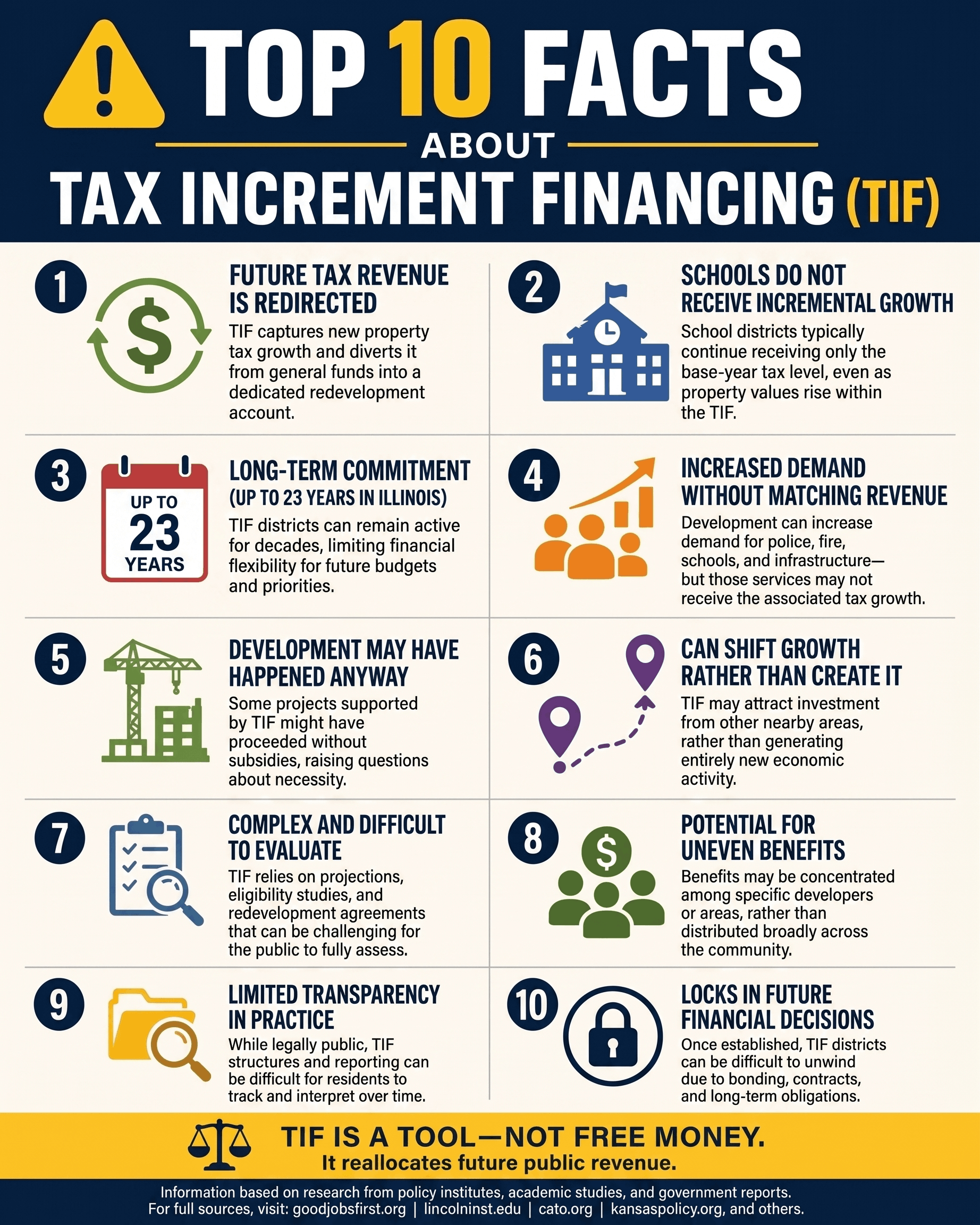
Sometimes, a city gives a special deal to a developer to build in one specific neighborhood. However, that developer might have built their project anyway, just in a different part of town. Instead of creating "new" jobs or buildings for the whole city, the TIF just moves them from one spot to another. This can be unfair to the neighborhoods that didn't get the special deal.
2. Is It Really Necessary?
There is a big debate about whether the government should use public money to help rich companies or developers.
The Good: Some projects are so expensive or difficult that they would never happen without help.
The Bad: Other times, a company is already wealthy and doesn't actually need the money—they just take it because it's available. It becomes a "convenience" rather than a "necessity."
3. It’s Hard to Stop
Once a TIF starts, it’s very hard to cancel. The city often borrows money (called bonds) based on the taxes they expect to collect in the future. Because of this, the city is "locked in" to the plan for a long time, even if the community’s needs change later on.
The Bottom Line
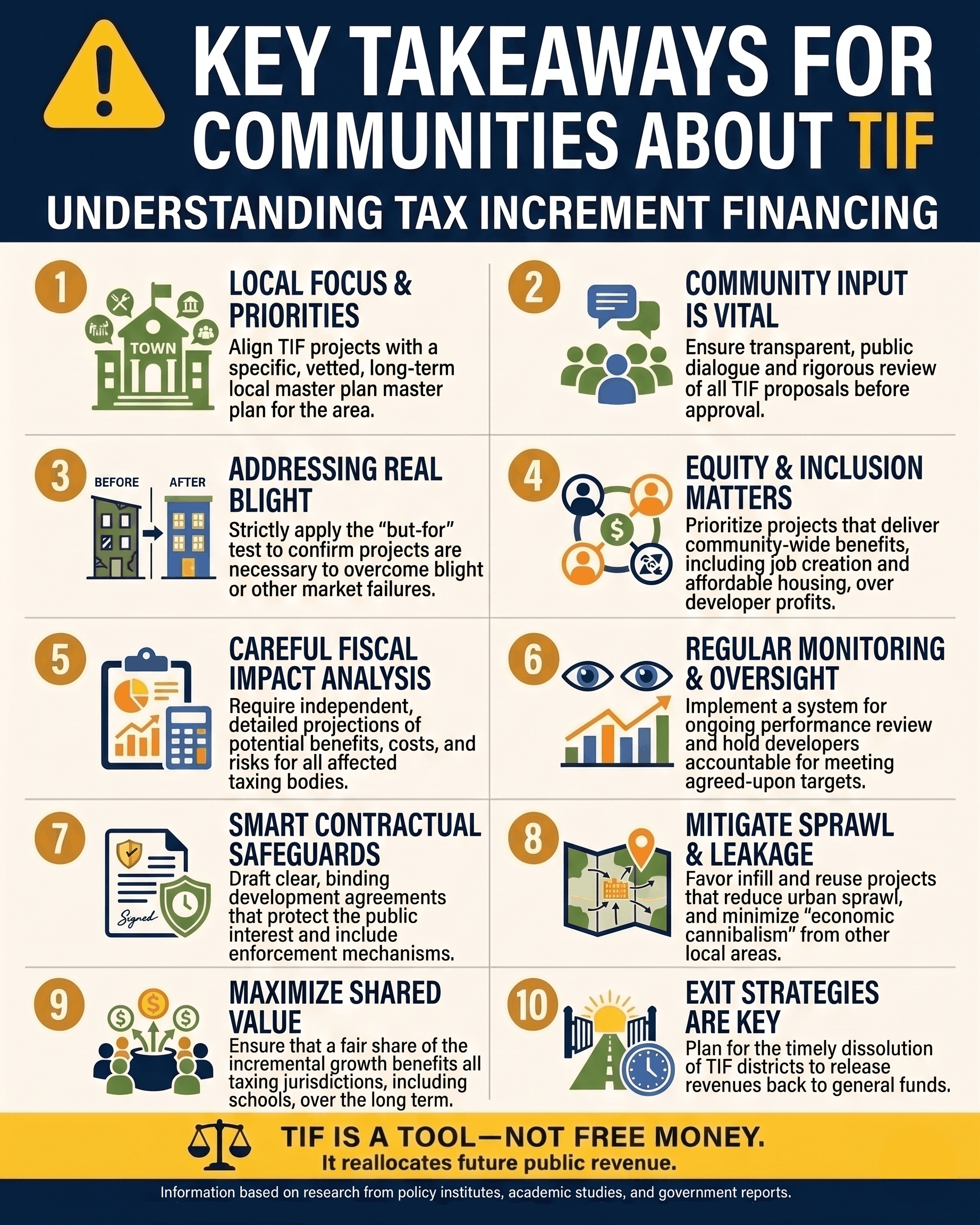
TIFs aren't "evil," but they aren't "free money" either. They are a way of spending future tax money today. Because it's such a big commitment, a community needs to look very closely at the deal to make sure it's actually worth the trade-off.